Tuesday, April 25, 2006

NICE - new website

www.nice.org.uk

The National Institute for Health and Clinical Excellence (NICE) has re-launched its website.

Following on from the merger between NICE and the Health Development Agency, the new site integrates clinical and public health content on one site.

NICE produces guidance in three areas of health:

  • public health
  • health technologies
  • clinical practice

Key features of the site include:

  • An improved “guidance search” facility
  • The ability to search for NICE guidance by type and topic

Monday, April 24, 2006

How States Are Working with Physicians to Improve the Quality of Children's Health Care

H. Pelletier
National Academy for State Health Policy and The Commonwealth Fund
April 2006

summary

full report (pdf)

Friday, April 21, 2006

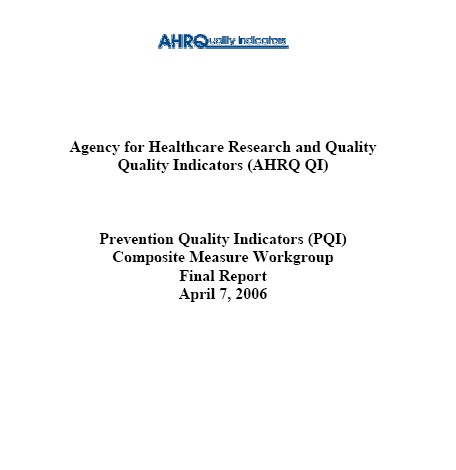
AHRQ – Prevention Quality Indicators (PQI) Composite Measure Workgroup

Final Report - April 7, 2006

This report summarizes the work of the PQI Composite Measure Workgroup, which was convened to assist Agency for Healthcare Research and Quality (AHRQ) in developing a composite measure based on the Prevention Quality Indicators for use in the National Healthcare Quality Report and National Healthcare Disparities Report.

The intended use of the PQI composite is to provide national estimates that can be tracked over time, and to provide state estimates than can be compared with the national estimate and to each other.

Thursday, April 20, 2006

Measuring the quality of cancer care

Outcomes research at the National Cancer Institute: Measuring, understanding and improving the outcomes of cancer care.
Lipscomb J, Davidson M
Clin Ther 25:699-712, 2003
Abstract Abstract + References PDF (875 K)


A process for measuring the quality of cancer care: The Quality Oncology Practice Initiative.
Neuss MN, Desch CE, McNiff KK, et al
J Clin Oncol 23:6233-6239, 2005
[Abstract/Free Full Text]


Medicare demonstration projects acknowledge evidence-based medicine in cancer care.
Twombly R
J Natl Cancer Inst 97:6-7, 2005
[Free Full Text]


Developing a system to assess the quality of cancer care: ASCO's national initiative on cancer care quality.
Schneider EC, Epstein AM, Malin JL, et al
J Clin Oncol 22:2985-2991, 2004
[Free Full Text]

Wednesday, April 19, 2006

JAMA - Will Physician-Level Measures of Clinical Performance Be Used in Medical Malpractice Litigation?

Aaron S. Kesselheim; Timothy G. Ferris; David M. Studdert
JAMA. 2006;295:1831-1834.
EXTRACT FULL TEXT PDF

Tuesday, April 18, 2006

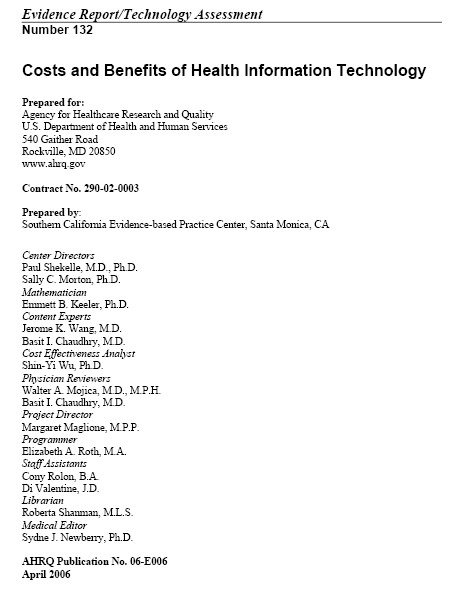
AHRQ - Costs and Benefits of Health Information Technology

The report from Agency for Healthcare Research and Quality (AHRQ) is a synthesis of studies that have examined the quality impact of health IT as well as the costs and organizational changes needed to implement health IT systems.
report pdf

press release

An article summarizing the report is available on Annals of Internal Medicine

Friday, April 14, 2006

Physician Exec - Special Report: Patient Trust and Safety

Full disclosure and apology—an idea whose time has come.
Leape LL.
Physician Exec. 2006 Mar-Apr;32:16-18.
Free full text (PDF)

Who’s sorry now?
Weber DO.
Physician Exec. 2006 Mar-Apr;32:6,11-14.
Free full text (PDF)

Thursday, April 13, 2006

J Nurs Care Qual - A Nurse-driven System for Improving Patient Quality Outcomes

Kathie Johnson; David Hallsey; Rita L. Meredith; Elizabeth Warden
Journal of Nursing Care Quality. 21(2):168-175, April/June 2006.
Abstract HTML PDF (112 K)

Wednesday, April 12, 2006

Ann Intern Med - Computerization can create safety hazards

a bar-coding near miss
McDonald CJ.
Ann Intern Med. 2006 Apr 4;144(7):510-6.
Abstract Full Text PDF

Tuesday, April 11, 2006

HealthcarePapers - Performance Reports

HealthcarePapers Vol. 6 No. 2 2005

Editorial
Notes from the Editor-in-Chief
Peggy Leatt

Invited Essay
Making Performance Reports Work
Adalsteinn D. Brown, Hamida Bhimani and Hugh MacLeod

Commentary
Back to Basics on Report Cards
Albert J. Schumacher

Extreme Makeover: Can We Achieve Rapid Improvement in Canada's Healthcare System?
Nandita Chaudhuri, Bonnie Brossart, Steven Lewis, Gill White

Why Performance Indicators Have a Place in Health Policy
Terri Jackson

Target and Tailor the Data
Brian T. Collopy

Making Performance Reports Work: It's a Matter of Common Sense
Bruce A. Boissonnault

Performance Reporting: Alignment with Accreditation
Wendy Nicklin, Paula Greco, Christopher Dean

Public Reporting Makes Accountability Possible
Robert Y. McMurtry

About Context and Systems
Niek Klazinga

The Authors Respond
The Importance of Context and Attention
Adalsteinn D. Brown, Hamida Bhimani, and Hugh MacLeod

Monday, April 10, 2006

Health Affairs - Nurse Staffing in Hosptials

Is there a Business Case for Quality?
J. Needleman et al.
Health Affairs, Jan./Feb. 2006 25(1):204–11.
html Reprint (PDF) Technical Appendix

Friday, April 07, 2006

Premier - Culture : Patient Safety

www.premierinc.com/all/safety/culture/


The Agency for Healthcare Research and Quality (AHRQ) in partnership with Premier Inc., the Department of Defense and the American Hospital Association announced a new survey tool to assess the safety culture of a hospital as a whole, or specific units within hospitals, as well as to track changes in patient safety over time and evaluate the impact of patient safety interventions.
Many other resources are available at the web site to assess organizational safety culture.

Thursday, April 06, 2006

J Biomed Inform - Using software agents to preserve individual health data confidentiality in micro-scale geographical analyses

Maged N. Kamel Boulos, Qiang Cai, Julian A. Padget and Gerard Rushton
Journal of Biomedical Informatics, Volume 39, Issue 2, April 2006, Pages 160-170
Abstract Full Text + Links PDF (464 K)

JAMIA - A Context-sensitive Approach to Anonymizing Spatial Surveillance Data

Impact on Outbreak Detection
Cassa CA, Grannis SJ, Overhage JM, Mandl KD.
Journal of Nursing Care Quality. 21(2):168-175, April/June 2006.
[Abstract] [Full Text] [PDF]

Wednesday, April 05, 2006

Arch Intern Med - Role of pharmacist counseling in preventing adverse drug events after hospitalization

Schnipper JL, Kirwin JL, Cotugno MC, et al.
Arch Intern Med. 2006;166:565-571.
pubmed

Tuesday, April 04, 2006

Monday, April 03, 2006

Harvard Hospitals - When Things Go Wrong


Responding to Adverse Events
A Consensus Statement of the Harvard Hospitals. Burlington: Massachusetts Coalition for the Prevention of Medical Errors; 2006.

This consensus statement of the Harvard-affiliated hospitals examines the potential benefits and risks of an institutional response quite different from what most hospitals choose today.
It focuses on rapid and open disclosure and emotional support to patients and families who experience serious incidents.
It also addresses ways to support and educate clinicians involved in such incidents and outlines the administrative components of a comprehensive institutional policy.

Free full text (PDF)

Friday, March 31, 2006

HSR - Quality Improvement Implementation and Hospital Performance on Quality Indicators

Bryan J. Weiner, Jeffrey A. Alexander, Stephen M. Shortell, Laurence C. Baker, Mark Becker, Jeffrey J. Geppert
Health Services Research 2006 41:2 307
abstract html pdf

Thursday, March 30, 2006

J Clin Epidemiol - Specific comorbidity risk adjustment was a better predictor

of 5-year acute myocardial infarction mortality than general methods
Grunau, GL; Sheps, S; Goldner, EM; Ratner, PA
JOURNAL OF CLINICAL EPIDEMIOLOGY, 59 (3): 274-280; MAR 2006
Abstract Full Text + Links PDF (116 K)

J Clin Epidemiol - Charlson scores based on ICD-10 administrative data were valid in assessing comorbidity

in patients undergoing urological cancer surgery
Nuttall, M; van der Meulen, J; Emberton, M
JOURNAL OF CLINICAL EPIDEMIOLOGY, 59 (3): 265-273; MAR 2006
Abstract Full Text + Links PDF (148 K)

Wednesday, March 29, 2006

Medical Care - Impact of Changing the Statistical Methodology on Hospital and Surgeon Ranking

The Case of the New York State Cardiac Surgery Report Card.
Laurent G. Glance, Andrew Dick, Turner M. Osler, Yue Li, Dana B. Mukamel.
Medical Care. 44(4):311-319, April 2006.
Abstract HTML PDF (469 K)

Medical care - Risk-Adjusted Mortality as an Indicator of Outcomes

Comparison of the Medicare Advantage Program With the Veterans' Health Administration.
Alfredo J. Selim, Lewis E. Kazis, William Rogers, Shirley Qian, James A. Rothendler, Austin Lee, Xinhua S. Ren, Samuel C. Haffer, Russ Mardon, PhD; Donald Miller, Avron Spiro III, Bernardo J. Selim, Benjamin G. Fincke.
Medical Care. 44(4):359-365, April 2006.
Abstract HTML PDF (268 K)

Tuesday, March 28, 2006

AHRQ - Consumer Assessment of Healthcare Providers and Systems

The Consumer Assessment of Healthcare Providers and Systems (CAHPS) program develops and supports the use of a comprehensive and evolving family of standardized surveys that ask consumers and patients to report on and evaluate their experiences with health care.
CAHPS originally stood for the Consumer Assessment of Health Plans Study, but as the products have evolved beyond health plans, the name has evolved as well to capture the full range of survey products and tools.
The CAHPS program is funded and administered by the U.S. Agency for Healthcare Research and Quality (AHRQ), which works closely with a consortium of public and private organizations.

http://www.cahps.ahrq.gov/

Monday, March 27, 2006

JCAHO - Implementation Guide for the National Quality Forum (NQF) Endorsed Nursing-Sensitive Care Performance Measures

The guide provides detailed specifications for the 15 national voluntary consensus standards for nursing-sensitive care endorsed by the
National Quality Forum (NQF).

The project to develop this guide was undertaken by The Joint Commission on Accreditation of Healthcare Organizations (JCAHO) through funding provided by the Robert Wood Johnson Foundation (RWJF), with the guidance of an advisory panel which included the measure developers.

full text

Friday, March 24, 2006

Medical Care Research and Review - Pay-for-Performance supplement

Peggy McNamara
Foreword: Payment Matters? The Next Chapter
Med Care Res Rev 2006 63: 5S-10S.
[PDF] [References]

Dan Berlowitz, James F. Burgess, Jr., and Gary J. Young
Introduction
Med Care Res Rev 2006 63: 11S-13S.
[PDF]

Jeffrey Levin-Scherz, Nicole DeVita, and Justin Timbie
Impact of Pay-for-Performance Contracts and Network Registry on Diabetes and Asthma HEDIS®Measures in an Integrated Delivery Network
Med Care Res Rev 2006 63: 14S-28S.
[Abstract] [PDF] [References]

Stephen R. Grossbart
What's the Return? Assessing the Effect of "Pay-for-Performance" Initiatives on the Quality of Care Delivery
Med Care Res Rev 2006 63: 29S-48S.
[Abstract] [PDF] [References]

Tammie A. Nahra, Kristin L. Reiter, Richard A. Hirth, Janet E. Shermer, and John R. C. Wheeler Cost-Effectiveness of Hospital Pay-for-Performance Incentives
Med Care Res Rev 2006 63: 49S-72S.
[Abstract] [PDF] [References]

Barbara G. Bokhour, James F. Burgess, Jr., Julie M. Hook, Bert White, Dan Berlowitz, Matthew R. Guldin, Mark Meterko, and Gary J. Young
Incentive Implementation in Physician Practices: A Qualitative Study of Practice Executive Perspectives on Pay for Performance
Med Care Res Rev 2006 63: 73S-95S.
[Abstract] [PDF] [References]

Jeff Beich, Dennis P. Scanlon, Jan Ulbrecht, Eric W. Ford, and Ibrahim A. Ibrahim
The Role of Disease Management in Pay-for-Performance Programs for Improving the Care of Chronically Ill Patients
Med Care Res Rev 2006 63: 96S-116S.
[Abstract] [PDF] [References]

Glenn Hackbarth
Commentary
Med Care Res Rev 2006 63: 117S-121S.
[PDF]

Mark R. Chassin
Does Paying for Performance Improve the Quality of Health Care?
Med Care Res Rev 2006 63: 122S-125S.
[PDF]

Robert S. Galvin
Evaluating the Performance of Pay for Performance
Med Care Res Rev 2006 63: 126S-130S.
[PDF] [References]

Thursday, March 23, 2006

Milbank Quarterly - The Indiana Chronic Disease Management Program

Rosenman, MB; Holmes, AM; Ackermann, RT; Murray, MD; Doebbeling, CC; Katz, B; Li, JJ; Zillich, A; Prescott, VM; Downs, SM; Inui, TS
MILBANK QUARTERLY, 84 (1): 135-163; 2006
abstract full text pdf

Milbank Quarterly - Stories from the sharp end

Case studies in safety improvement
McCarthy, D; Blumenthal, D
MILBANK QUARTERLY, 84 (1): 165-200; 2006
abstract full text pdf

Wednesday, March 22, 2006

AHRQ - 2005 State Snapshots

Agency for Healthcare Research and Quality released a new interactive Web-based tool for States to use in measuring health care quality.
The new State Snapshot Web tool is based on the 2005 National Healthcare Quality Report (NHQR) and the 2005 National Healthcare Disparities Report (NHDR) and provides quick and easy access to the many measures and tables of the NHQR from each State’s perspective.

State Snapshot tool

Tuesday, March 21, 2006

ASSR - Gli Indicatori per la qualità: strumenti, metodi, risultati

Supplemento al n. 15 di Monitor PDF
Agenzia per i Servizi Sanitari Regionali (ASSR)

Parte 1: Identificazione sperimentazione e validazione di alcuni indicatori di processo ed esito della qualità delle attività sanitarie

  • Presentazione di Laura Pellegrini e Leonardo La Pietra
  • I componenti del gruppo di ricerca
  • Introduzione alla ricerca e obiettivi
  • Metodologia e risultati
  • Rassegna della letteratura e delle esperienze
  • Allegati

Parte 2: Identificazione, sperimentazione e validazione di alcuni indicatori di qualità delle attività sanitarie e socio sanitarie del territorio Rapporto preliminare

  • Il nuovo progetto sugli indicatori per le attività territoriali
  • I componenti del gruppo di ricerca
  • Rassegna della letteratura


Parte 3: Allegati aggiuntivi non pubblicati nel Supplemento


Criteri di transcodifica e trasformazione delle variabili nel tracciato record SDO

Quesiti dei rilevatori dati e risposte dei clinici

Distribuzione delle covariate per sesso

Distribuzione delle covariate per classe di età

Distribuzione delle covariate per classe di gravità (rischio di morte)

Distribuzione delle covariate e copertura degli indicatori di mortalità per regione

La qualità della documentazione clinica

Monday, March 20, 2006

OECD - Health Care Quality Indicators Project Initial Indicators Report

OECD HEALTH WORKING PAPERS NO. 22
Soeren Mattke, Edward Kelley, Peter Scherer,
Jeremy Hurst, Maria Luisa Gil Lapetra
and the HCQI Expert Group Members
09-Mar-2006

The Health Care Quality Indicators Project has been divided into two phases. The initial phase, for which this report serves as the summary report, concentrated on 17 important and readily available indicators of effectiveness of care.

Future indicators to be considered in the second phase of work will consider a broader set of clinical conditions and other dimensions of health care quality.

pdf

Friday, March 17, 2006

IOM - Medicare's Quality Improvement Organization Program

Maximizing Potential

Series: Pathways to Quality Health Care - Institute of Medicine

This report examines the Quality Improvement Organization program in detail and proposes a major restructuring of it so that it can become an important national resource integral to strategies of performance measurement, public reporting, and payment incentives.

The QIO program should focus on offering, through its infrastructure in each state, technical assistance to providers and practitioners aimed at building their capacity for quality improvement.

Thursday, March 16, 2006

NEJM - Who Is at Greatest Risk for Receiving Poor-Quality Health Care?

Asch, Steven M., Kerr, Eve A., Keesey, Joan, Adams, John L., Setodji, Claude M., Malik, Shaista, McGlynn, Elizabeth A.
N Engl J Med 2006 354: 1147-1156

Abstract FREE Full Text PDF Supplementary Material

RAND News Release

Wednesday, March 15, 2006

International Journal of Evidence-based Healthcare - Systematic review

Strategies to reduce medication errors with reference to older adults.
Hodgkinson, Brent, Koch, Susan, Nay, Rhonda & Nichols, Kim
International Journal of Evidence-based Healthcare (2006) 4 (1), 2-41.
abstract full text pdf

Tuesday, March 14, 2006

OECD - Health Care Quality Indicators Project Conceptual Framework Paper

OECD HEALTH WORKING PAPERS NO. 23
Edward Kelley and Jeremy Hurst
09-Mar-2006

This paper represents an attempt to set out a conceptual framework for the OECD's Health Care Quality Indicator (HCQI) Project.

Two main issues are tackled: what concepts, or dimensions, of quality of health care should be measured and how, in principle, should they be measured.

pdf

Monday, March 13, 2006

BMJ - Information technology

Will Connecting for Health deliver its promises?
Michael Cross
BMJ 2006;332:599-601
[Full text] [PDF]

Psychiatr Serv - Transforming mental health care at the interface with general medicine

report for the presidents commission
Unutzer J, Schoenbaum M, Druss BG, Katon WJ.
Psychiatr Serv. 2006 Jan;57(1):37-47.
[Abstract] [Full Text] [PDF]

Friday, March 10, 2006

BMJ - Kaiser Permanente's experience of implementing an electronic medical record

a qualitative study
J Tim Scott, Thomas G Rundall, Thomas M Vogt, John Hsu
BMJ 2005;331:1313-1316
[Abstract] [Full text] [PDF] [extra: Interview prompt sheet]

Commentary
Trouble in paradise—learning from Hawaii
Sheila Teasdale
BMJ 2005;331:1316
[Full text] [PDF]

Thursday, March 09, 2006

JAMA - All-or-None Measurement Raises the Bar on Performance

Thomas Nolan; Donald M. Berwick
JAMA. 2006;295:1168-1170.
EXTRACT FULL TEXT PDF

Wednesday, March 08, 2006

NACH - Briggs® National Quality Improvement and Hospitalization Reduction Study

The final Briggs National Quality Improvement/ Hospitalization Reduction Study has been completed and the full report is now available.

The study, which was launched to determine the best practices used by home health agencies to reduce patient re-hospitalizations, was sponsored by the Briggs Corp. and cosponsored by National Association for Home Care (NAHC) and Fazzi Associates.

Tuesday, March 07, 2006

Health Affairs - Medical Technology

Is Technological Change In Medicine Always Worth It? The Case Of Acute Myocardial Infarction
Jonathan S. Skinner, Douglas O. Staiger, and Elliott S. Fisher
Health Affairs, 25, no. 2 (2006): w34-w47
[Abstract] [Full Text] [Figures Only] [PDF]

Making Sense Of Medical Technology
David M. Cutler
Health Affairs, 25, no. 2 (2006): w48-w50
[Abstract] [Full Text] [PDF]

To Use Technology Better
Alan M. Garber
Health Affairs, 25, no. 2 (2006): w51-w53
[Abstract] [Full Text] [PDF]

Monday, March 06, 2006

J Am Coll Surg - Developing Quality Indicators for Elderly Patients Undergoing Abdominal Operations

McGory ML, Shekelle PG, Rubenstein LZ, Fink A, Ko CY.
Journal of the American College of Surgeons, Vol. 201, No. 6, Dec 2005, pp. 870-883.
Abstract Full Text + Links PDF (141 K)

Friday, March 03, 2006

J Clin Oncol - Results of the National Initiative for Cancer Care Quality

How Can We Improve the Quality of Cancer Care in the United States?
Jennifer L. Malin, Eric C. Schneider, Arnold M. Epstein, John Adams, Ezekiel J. Emanuel, Katherine L. Kahn
Journal of Clinical Oncology, Vol 24, No 4 (February 1), 2006: pp. 626-634
[Abstract] [Full Text] [PDF]

Supportive Care in Cancer - Understanding Cancer Patients Experience and Outcomes

Development and Pilot Study of the Cancer Care Outcomes Research and Surveillance Patient Survey
Malin JL, Ko C, Ayanian JZ, Harrington D, Nerenz DR, Kahn KL, Ganther-Urmie J, Catalano PJ, Zaslavsky AM, Wallace RB, Guadagnoli E, Arora NK, Roudier MD, Ganz PA.
Supportive Care in Cancer , Vol. 44, No. 2, Feb 2006, pp. 141-148.

Thursday, March 02, 2006

HFMA - Overcoming Barriers to Electronic Health Record Adoption

Results of Survey and Roundtable Discussions Conducted by the Healthcare Financial Management Association

The Healthcare Financial Management Association (HFMA) released a report that identifies the top barriers to electronic health record implementation and recommends strategies for government to help providers overcome those barriers.

Report (pdf)

Wednesday, March 01, 2006

Medical Care - Exposure to Automated Drug Alerts Over Time

Effects On Clinicians' Knowledge And Perceptions.
Medical Care. 44(3):250-256, March 2006.
Peter A. Glassman; Pamela Belperio; Barbara Simon; Andrew Lanto; Martin Lee
Abstract HTML PDF (264 K)

Medical Care - Clinical Information Technology Capabilities in Four U.S. Hospitals

Testing a New Structural Performance Measure.
Medical Care. 44(3):216-224, March 2006.
Ruben Amarasingham; Marie Diener-West; Michael Weiner; Harold Lehmann; Jerome E. Herbers; Neil R. Powe
Abstract HTML PDF (635 K)

Tuesday, February 28, 2006

JAMA - Credentialing and Public Accountability

A Central Role for Board Certification
Christine K. Cassel and Eric S. Holmboe
JAMA. 2006;295:939-940.
EXTRACT FULL TEXT

Use of Board Certification and Recertification of Pediatricians in Health Plan Credentialing Policies
Gary L. Freed, Dianne Singer, Indu Lakhani, John R. C. Wheeler, James A. Stockman, III, and for the Research Advisory Committee of the American Board of Pediatrics
JAMA. 2006;295:913-918.
ABSTRACT FULL TEXT

Policies and Practices Related to the Role of Board Certification and Recertification of Pediatricians in Hospital Privileging
Gary L. Freed, Rebecca L. Uren, Ericka J. Hudson, Indu Lakhani, John R. C. Wheeler, James A. Stockman, III, and for the Research Advisory Committee of the American Board of Pediatrics
JAMA. 2006;295:905-912.
ABSTRACT FULL TEXT

Monday, February 27, 2006

Ann Intern Med - Volume, Quality of Care, and Outcome in Pneumonia

Peter K. Lindenauer, Raj Behal, Cynthia K. Murray, Wato Nsa, Peter M. Houck, and Dale W. Bratzler
Ann Intern Med.2006; 144: 262-269.
Abstract Full Text PDF

Friday, February 24, 2006

NQF - Standardizing a Patient Safety Taxonomy

The lack of a framework on how to define and classify patient safety events, healthcare errors, and systems failures is a major barrier to the systematic understanding of where and how such problems occur.

This National Quality Forum (NQF) report presents a set of four voluntary consensus standards around a specific patient safety taxonomy—the Patient Safety Event Taxonomy (PSET).

Executive summary (PDF)

Thursday, February 23, 2006

Wednesday, February 22, 2006

Ann Intern Med - Better Ways To Question Patients about Adverse Medical Events

A Randomized, Controlled Trial
Stephen Bent, Amy Padula, and Andrew L. Avins
Ann Intern Med.2006; 144: 257-261.
Abstract Full Text PDF

Editorial
Adverse Events: The More You Search, the More You Find
John P.A. Ioannidis, Cynthia D. Mulrow, and Steven N. Goodman
Ann Intern Med.2006; 144: 298-300.
Full Text PDF

Tuesday, February 21, 2006

AHRQ - Quality Indicator Version 3.0


The Agency for Healthcare Research and Quality (AHRQ) announced the release of the AHRQ Quality Indicator Version 3.0 for the Inpatient Quality Indicators (IQI) and Patient Safety Indicators (PSI), and the new Pediatric Quality Indicator (PedQI) module.

The software (developed in SAS and Windows) and documentation are available for download from the AHRQ QI web site:
www.qualityindicators.ahrq.gov

Friday, February 17, 2006

Health Care Manage Rev - Comparing high- and low-performing hospitals using risk-adjusted excess mortality and cost inefficiency.

McKay NL, Deily ME.
Health Care Manage Rev. 2005 Oct-Dec;30(4):347-60.
Abstract HTML PDF (280 K)

IHI - A Guide to Idealized Design

Moen R.
Cambridge, Massachusetts: Institute for Healthcare Improvement; 2002.

The Institute for Healthcare Improvement created Idealized Design to bring together organizations committed to comprehensive system redesign.
more...

pdf

Thursday, February 16, 2006

Women Health - Potentially avoidable maternity complications

an indicator of access to prenatal and primary care during pregnancy
Laditka SB, Laditka JN, Mastanduno MP, Lauria MR, Foster TC.
Women Health. 2005;41(3):1-26.
Pubmed

J Am Coll Surg - Developing quality indicators for elderly patients undergoing abdominal operations

McGory ML, Shekelle PG, Rubenstein LZ, Fink A, Ko CY.
J Am Coll Surg. 2005 Dec;201(6):870-83.
Abstract Full Text + Links PDF (141 K)

Wednesday, February 15, 2006

BMC Health Serv Res - Correlates of health and healthcare performance

applying the Canadian Health Indicators Framework at the provincial-territorial level
Arah OA, Westert GP
BMC Health Serv Res. 2005 Dec 1;5:76.
Full text PDF

J Cardiopulm Rehabil - Quality indicators in cardiovascular care

the case for cardiac rehabilitation.
Thomas RJ, Witt BJ, Lopez-Jimenez F, King ML, Squires RW.
J Cardiopulm Rehabil. 2005 Sep-Oct;25(5):249-56.
HTML PDF (139 K)

Tuesday, February 14, 2006

AHRQ - National Resource Center on Health Information Technology

Agency for Healthcare Research and Quality (AHRQ) launched a new suite of "learning resources" designed to help health care providers adopt health information technologies quickly and effectively.

The resource center site provides emerging lessons from the field; a knowledge library with links to more than 5,000 health IT information resources; an evaluation toolkit to help those implementing health IT projects; a summary of key topics; plus other resources pointing to current health IT activities, funding opportunities, and other information.

http://www.healthit.ahrq.gov

Monday, February 13, 2006

Can J Aging - Health and Health Care use Among Older Adults


Volume 24, Supplement 1, 2005 (pdf)

Introduction
Verena H. Menec

Trends in the Health Status of Older Manitobans, 1985 to 1999
Verena H. Menec, Lisa Lix, and Leonard MacWilliam

Trends in the Utilization of Specific Health Care Services among Older Manitobans: 1985 to 2000
Marcia Finlayson, Lisa Lix, Gregory S. Finlayson, and Terry Fong

Use ofPhysician Services by Older Adults: 1991/1992 to 2000/2001
Diane E. Watson, Petra Heppner, Robert Reid, Bogdan Bogdanovic, and Noralou Roos

Growing Old Together: The Influence of Population and Workforce Aging on Supply and Use of Family Physicians
Diane E. Watson, Robert Reid, Noralou Roos, and Petra Heppner

Non-Clinical Factors Associated with Variation in Cataract Surgery Waiting Times in Manitoba
Carolyn De Coster

Patterns in Home Care Use in Manitoba
Lori Mitchell, Noralou P. Roos, and Evelyn Shapiro

Regional Variation in Home Care Use in Manitoba
Sandra Peterson, Evelyn Shapiro, and Noralou P. Roos

Pharmaceutical Use among Older Adults: Using Administrative Data to Examine Medication-Related Issues
Colleen Metge, Ruby Grymonpre, Matthew Dahl, and Marina Yogendran

Use of Acute Care Hospitals by Long-Stay Patients: Who, How Much, and Why?
Carolyn De Coster, Sharon Bruce, and Anita Kozyrskyj

Discharge Outcomes in Seniors Hospitalized for More than 30 Days
Anita Kozyrskyj, Charlyn Black, Dan Chateau, and Carmen Steinbach

Exploring Reasons for Bed Pressures in Winnipeg Acute Care Hospitals
Verena H. Menec, Sharon Bruce, and Leonard MacWilliam

Anticipating Change: How Many Acute Care Hospital Beds Will Manitoba Regions Need in 2020?
Gregory S. Finlayson, David Stewart, Robert B. Tate, Leonard MacWilliam,and Noralou Roos

A Methodology for Estimating Hospital Bed Need in Manitoba in 2020
Robert B. Tate, Leonard MacWilliam, and Gregory S. Finlayson

Data Quality in an Information-Rich Environment: Canada as an Example
Leslie L. Roos, Sumit Gupta, Ruth-Ann Soodeen, and Laurel Jebamani

Commentary
Betty Havens

Friday, February 10, 2006

BMJ - Case reports of suspected adverse drug reactions—systematic literature survey of follow-up

Yoon Kong Loke, Deirdre Price, Sheena Derry, and Jeffrey K Aronson
BMJ 2006 332: 335-339.
[Abstract] [Full Text] [PDF] [extra: References]

Qual Saf Health Care - Hearing the patient’s voice?

Factors affecting the use of patient survey data in quality improvement
E Davies and P D Cleary
Qual Saf Health Care 2005; 14: 428-432.
[Abstract] [Full text] [PDF]

Thursday, February 09, 2006

CIHI - The Health Indicators Project: The Next 5 Years.

Report from the Second Consensus Conference on Population Health Indicators
The second Consensus Conference on Population Health Indicators was convened in order to achieve agreement on the measures used by the Canadian Institute for Health Information (CIHI) and Statistics Canada reflecting the health of Canadians, factors that affect our health and the performance of the health care system. This report summarizes the results of the conference, and includes a list of confirmed health indicators as well as directions for future development

http://secure.cihi.ca/cihiweb/dispPage.jsp?cw_page=GR_1326_E

CPSI - Canadian Root Cause Analysis Framework

A tool for identifying and addressing the root causes of critical incidents in healthcare

The Canadian Root Cause Analysis Framework is designed as a quality improvement tool to help individuals and healthcare organizations determine all of the root causes/contributing factors that led to an event.

Authors: Canadian Patient Safety Institute (CPSI), Institute For Safe Medication Practices Canada and Saskatchewan Health

Root Cause Analysis Framework (PDF)

Monday, February 06, 2006

Stat Med - Funnel plots for comparing institutional performance

David J. Spiegelhalter
Statistics in MedicineVolume 24, Issue 8, 2005. Pages 1185-1202
Abstract PDF

Stat Med - Methods for capture-recapture analysis when cases lack personal identifiers

Betsy L. Cadwell, Philip J. Smith, Andrew L. Baughman
Statistics in Medicine Volume 24, Issue 13, 2005. Pages 2041-2051
Abstract PDF

Friday, February 03, 2006

Med Decis Making - Valuation Structures of Health States Revealed with Singular ValueDecomposition

Paul F. M. Krabbe
Med Decis Making 2006;26 30-37
[Abstract] [PDF] [References]

Int J Med Inform - Health information systems

Failure, success and improvisation
R. Heeks
International Journal of Medical Informatics
Volume 75, Issue 2 , February 2006, Pages 125-137
Abstract Full Text + Links PDF (160 K)

Thursday, February 02, 2006

Med Care Res Rev - Quality improvement implementation and hospital performance on patient safety indicators

Weiner BJ, Alexander JA, Baker LC, Shortell SM, Becker M.
Med Care Res Rev. 2006;63:29-57.
[Abstract] [PDF] [References]

Jt Comm J Qual Patient Safety - How many hospital pharmacy medication dispensing errors go undetected?

Cina JL, Gandhi TK, Churchill W, et al.
Jt Comm J Qual Patient Safety. 2006;32:73-80.
Abstract

Wednesday, February 01, 2006

AHRQ - Closing the Quality Gap: Antibiotic Prescribing Behavior

Unnecessary prescribing of antibiotics is a major problem in the US and worldwide, contributing to the problem of antimicrobial resistance (AMR). This review examines the effects of quality improvement strategies on reducing inappropriate prescribing of antibiotics, targeting both prescribing of antibiotics for non-bacterial illnesses ("the antibiotic treatment decision") and prescribing of broad-spectrum antibiotics when narrow-spectrum agents are indicated ("the antibiotic selection decision").

Closing the Quality Gap: A Critical Analysis of Quality Improvement Strategies: Volume 4—Antibiotic Prescribing BehaviorEvidence
Report (Publication No. 04(06)-0051-4)
(PDF file, 790 KB)

View or download Summary/Report

Tuesday, January 31, 2006

IOM - Valuing Health for Regulatory Cost-Effectiveness Analysis

This report from the Institute of Medicine (IOM) reviews and makes recommendations for using integrated measures of morbidity and mortality (such as quality-adjusted life years, or QALYs); reporting cost-effectiveness ratios; and data and research needs to improve regulatory cost-effectiveness analysis.
It also considers the ethical implications of using cost-effectiveness analysis, and integrated measures of health impact, in regulatory policy development.
www.iom.edu/CMS/3809/19739/32029.aspx

Monday, January 30, 2006

Int J Qual Health Care - Challenging the world: patient safety and health care-associated infection

Didier Pittet and Liam Donaldson
International Journal for Quality in Health Care 2006 18(1):4-8
[Abstract] [Full Text] [PDF]

editorial
A research agenda for patient safety
Thomas V. Perneger
Int J Qual Health Care 2006 18: 1-3
[Extract] [Full Text] [PDF]

Int J Qual Health Care - Use of risk-adjusted change in health status to assess the performance of integrated service networks in the Veterans Health

Selim AJ, Berlowitz D, Fincke G, Rogers W, Qian S, Lee A, Cong Z, Selim BJ, Ren XS, Rosen AK, Kazis LE.
International Journal for Quality in Health Care . 2006 Feb;18(1):43-50.
[Abstract] [Full Text] [PDF]

Friday, January 27, 2006

Medical Care - Readiness to Report Medical Treatment Errors

The Effects of Safety Procedures, Safety Information, and Priority of Safety.
Eitan Naveh, Tal Katz-Navon, Zvi Stern,
Medical Care. 44(2):117-123, February 2006.
Abstract HTML PDF

Medical Care - Comparison of Administrative Data and Medical Records to Measure the Quality of Medical Care Provided to Vulnerable Older Patients.

Catherine H. MacLean, Rachel Louie, Paul G. Shekelle, Carol P. Roth, Debra Saliba, Takahiro Higashi, John Adams, John T. Chang, Caren J. Kamberg, David H. Solomon, Roy T. Young, Neil S. Wenger
Medical Care. 44(2):141-148, February 2006.
Abstract HTML PDF

Thursday, January 26, 2006

IHI - Safety Climate Survey

Organizations working to develop or improve a culture of safety need a reliable measure to monitor the success of their initiatives.
The Institute for Healthcare Improvement (IHI) in collaboration with The Center of Excellence for Patient Safety Research & Practice at the University of Texas develop this survey tool to gain information about the perceptions of front-line clinical staff about safety in their clinical area.

Safety Climate Survey 2005 (IHI Tool)

Safety Climate Survey 2005 Benchmarking Data

Safety Climate Survey Calculation Spreadsheet 2005 (IHI Tool)

Wednesday, January 25, 2006

NPSA - Incident Decision Tree

The Incident Decision Tree is a key component of the National Patient Safety Agency’s (NPSA) drive to help the NHS move away from asking “Who was to blame?” to “Why did the individual act in this way?” when things go wrong.

The Incident Decision Tree has been created to help NHS managers and senior clinicians decide whether they need to suspend (exclude) staff involved in a serious patient safety incident and to identify appropriate management action.

The aim is to promote fair and consistent staff treatment within and between healthcare organisations.

The Incident Decision Tree complements the NPSA’s Root Cause Analysis toolkit and the two can be used in parallel.

Tuesday, January 24, 2006

NHS - Discharge from hospital pathway, process and practice

This learning material from the United Kingdom Department of Health's is designed to help senior staff and practitioners in acute hospitals and their partners in local authorities and primary care trusts to improve the discharge care pathway of adults who have complex discharge needs.

PDF HTML

Monday, January 23, 2006

JAMA - The 100 000 Lives Campaign

Setting a Goal and a Deadline for Improving Health Care Quality
Donald M. Berwick, MD, MPP, FRCP; David R. Calkins, MD, MPP; C. Joseph McCannon, BA; Andrew D. Hackbarth, BA
JAMA. 2006;295:324-327
PDF

Friday, January 20, 2006

Ann Fam Med - The break-even point

when medical advances are less important than improving the fidelity with which they are delivered
Woolf SH, Johnson RE.
Ann Fam Med. 2005 Nov-Dec;3(6):545-52
[Full Text] [PDF] [Supplemental data: Figure]

HSC - Can Money Buy Quality?

Physician Response to Pay for Performance

Thomas Bodenheimer, Jessica H. May, Robert A. Berenson, Jennifer Coughlan
Center for Studying Health System Change (HSC)
Issue Brief No. 102 , December 2005
pdf html

Thursday, January 19, 2006

AHRQ - The Hospital Built Environment

What Role Might Funders of Health Services Research Play?
AHRQ Publication No. 05-0106-EF, October 2005.
http://www.ahrq.gov/qual/hospbuilt/

A literature review and interviews with architects, designers, academics, and health care executives were conducted between February and May of 2005, in an attempt to determine if associations exist between hospital building design elements and patient and staff safety, health outcomes, and patient and staff satisfaction levels.

The findings were used to bring focus to the challenges of evidence-based hospital design and the roles that funders might play in the development and transfer of knowledge related to the constructed hospital environment.

pdf

Wednesday, January 18, 2006

Tuesday, January 17, 2006

BMJ - ABC of health informatics

Health and the future: promise or peril?
Jeremy C Wyatt and Frank Sullivane
BMJ, Dec 2005; 331: 1391 - 1393
Full text PDF

Communication and navigation around the healthcare system
Jeremy C Wyatt and Frank Sullivan
BMJ, Dec 2005; 331: 1325 - 1327
Full text PDF

Improving services with informatics tools
Frank Sullivan and Jeremy C Wyatt
BMJ, Nov 2005; 331: 1190 - 1192
Full text PDF

Keeping up: learning in the workplace
Jeremy C Wyatt and Frank Sullivan
BMJ, Nov 2005; 331: 1129 - 1132
Full text PDF

Referral or follow-up?
Frank Sullivan and Jeremy C Wyatt
BMJ, Nov 2005; 331: 1072 - 1074
Full text PDF

How computers help make efficient use of consultations
Frank Sullivan and Jeremy C Wyatt
BMJ, Oct 2005; 331: 1010 - 1012
Full text PDF

How informatics tools help deal with patients' problems
Frank Sullivan and Jeremy C Wyatt
BMJ, Oct 2005; 331: 955 - 957
Full text PDF

How computers can help to share understanding with patients
Frank Sullivan and Jeremy C Wyatt
BMJ, Oct 2005; 331: 892 - 894
Full text PDF

How decision support tools help define clinical problems
Frank Sullivan and Jeremy C Wyatt
BMJ, Oct 2005; 331: 831 - 833
Full text PDF

Why is this patient here today?
Frank Sullivan and Jeremy C Wyatt
BMJ, Sep 2005; 331: 678 - 680
Full text PDF

Is a consultation needed?
Frank Sullivan and Jeremy C Wyatt
BMJ, Sep 2005; 331: 625 - 627
Full text PDF

What is health information?
Jeremy C Wyatt and Frank Sullivan
BMJ, Sep 2005; 331: 566 - 568
Full text PDF

Monday, January 16, 2006

Health Affairs - U.S. Hospitals: Mission Vs. Market

January/February 2006 - Volume 25, Number 1

The new issue of Health Affairs focuses entirely on hospitals, including studies on quality, reporting, pay-for-performance and other new technology.

http://content.healthaffairs.org/content/vol25/issue1/

Friday, January 13, 2006

AHRQ - 2005 Annual Patient Safety and HIT Conference Proceedings

This document provides a synopsis of the major findings from the 2005 Patient Safety and Health IT Conference as well as lists of various tools and products developed.

For greater detail, including power point presentations and video recordings of select presentations go to: healthit.ahrq.gov/.../materials.html.

Download the conference proceedings (MS-Word, 536KB)

Thursday, January 12, 2006

AHRQ - A Toolkit for Redesign in Health Care

Agency for Healthcare Research and Quality
www.ahrq.gov/qual/toolkit/

This toolkit presents strategies for comprehensively redesigning and transforming processes of care in a hospital.
It includes a discussion of the forces that compel health care systems to embark on redesign or system transformation; a series of steps to be taken in planning for such as redesign or system transformation; and strategies for translating information gathered into proposed projects for implementation.

This toolkit was prepared for the Agency for Healthcare Research and Quality (AHRQ) by Denver Health, a partner in AHRQ's Integrated Delivery System Research Network.

Select for print version (PDF File, 350 KB).

Wednesday, January 11, 2006

AHRQ Releases 2005 National Healthcare Quality And Disparities Reports

Press Release, January 9, 2006.
Agency for Healthcare Research and Quality, Rockville, MD. http://www.ahrq.gov/news/press/pr2005/nhqrdrpr.htm

These reports, issued annually, measure quality and disparities in four key areas of health care in U.S.: effectiveness, patient safety, timeliness, and patient centeredness.

The 2005 National Healthcare Quality Report finds that overall quality of care for all Americans improved at a rate of 2.8 percent, the same increase shown in last year's report. However, the report notes there has been much more rapid improvement in some measures, especially where there have been focused efforts to improve care.

The 2005 National Healthcare Disparities Report finds that many of the largest disparities in measures of quality and access are observed for low-income people regardless of race or ethnicity, with some signs of improvement.

Monday, January 09, 2006

Am J Med Qual - Dual-system use

are there implications for risk adjustment and quality assessment?
Rosen AK, Gardner J, Montez M, Loveland S, Hendricks A.
Am J Med Qual. 2005 Jul-Aug;20(4):182-94
Pubmed

Friday, January 06, 2006

Health Serv Res - CAHPS Hospital Survey Special issue

This special issue of Health Services Research focuses on Consumer Assessment of Healthcare Providers and Systems (CAHPS) Hospital Survey

December 2005 - Vol. 40 Issue 6p2 Page 1973-2181

Measuring Hospital Care from the Patients' Perspective: An Overview of the CAHPS® Hospital Survey Development Process
Goldstein, Elizabeth; Farquhar, Marybeth; Crofton, Christine; Darby, Charles; Garfinkel, Steven

Review of the Literature on Survey Instruments Used to Collect Data on Hospital Patients' Perceptions of Care
Castle, Nicholas G.; Brown, Julie; Hepner, Kimberly A.; Hays, Ron D.

What Do Consumers Want to Know about the Quality of Care in Hospitals?
Sofaer, Shoshanna; Crofton, Christine; Goldstein, Elizabeth; Hoy, Elizabeth; Crabb, Jenny

Role of Cognitive Testing in the Development of the CAHPS® Hospital Survey
Levine, Roger E.; Fowler, Floyd J.; Brown, Julie A.

Methods Used to Streamline the CAHPS® Hospital Survey
Keller, San; O'Malley, A. James; Hays, Ron D.; Matthew, Rebecca A.; Zaslavsky, Alan M.; Hepner, Kimberly A.; Cleary, Paul D.

Exploratory Factor Analyses of the CAHPS® Hospital Pilot Survey Responses across and within Medical, Surgical, and Obstetric Services
O'Malley, A. James; Zaslavsky, Alan M.; Hays, Ron D.; Hepner, Kimberly A.; Keller, San; Cleary, Paul D.

Patterns of Unit and Item Nonresponse in the CAHPS® Hospital Survey
Elliott, Marc N.; Edwards, Carol; Angeles, January; Hambarsoomians, Katrin; Hays, Ron D.

Equivalence of Mail and Telephone Responses to the CAHPS® Hospital Survey
Vries, Han; Elliott, Marc N.; Hepner, Kimberly A.; Keller, San D.; Hays, Ron D.

Assessment of the Equivalence of the Spanish and English Versions of the CAHPS® Hospital Survey on the Quality of Inpatient Care
Hurtado, Margarita P.; Angeles, January; Blahut, Steven A.; Hays, Ron D.

Case-Mix Adjustment of the CAHPS® Hospital Survey
O'Malley, A. James; Zaslavsky, Alan M.; Elliott, Marc N.; Zaborski, Lawrence; Cleary, Paul D.
Thursday, January 05, 2006

Am J Nurs - State of the Science on Safe Medication Administration

March 2005, Volume 105, Issue 3 supplement

Making Medication Administration Safe: Report challenges nurses to lead the way
Kathleen G. Burke, Diana J. Mason

Discussion & Recommendations: Safe Medication Administration: An invitational symposium recommends ways of addressing obstacles

Errors from the Consumer’s Perspective: Tragedy motivated one woman to take action
Ilene Corina

Executive Summary: The State of the Science on Safe Medication Administration symposium
Kathleen G. Burke

How We Think About Medication Errors: A model and a charge for nurses
Victoria L. Rich

Medication Errors: Why they happen, and how they can be prevented
Ronda G. Hughes, Eduardo Ortiz

Medication Reconciliation: Transfer of medication information across settings—keeping it free from error
Jane H. Barnsteiner

Technology and Safe Medication Administration
Mark Crawford, Janet Mullan, et al.

Toward Safer IV Medication Administration: The narrow safety margins of many IV medications make this route particularly dangerous
Patrice K. Nicholas, Christine R. Agius

Wednesday, January 04, 2006

J Clin Epidemiol - An Analysis of Administrative Data...

An Analysis of Administrative Data Found that Proximate Clinical Event Ratios Provided a Systematic Approach to Identifying Possible Iatrogenic Risk Factors or Complications.

Journal of Clinical Epidemiology 58:2005, 162-170.
W. Baine, S. Kazakova
Pubmed

Qual Saf Health Care - Supplements on Safety

Organisations and safety in healthcare
Quality and Safety in Health Care 2004 Dec; 13 (Suppl 2) : 1-56.

Patient safety methodology
Quality and Safety in Health Care 2003 Dec; 12 (Suppl 2) : 1-72.

Tuesday, January 03, 2006

Health Serv Res - Measurement special issue

This special issue of Health Services Research focuses on measurement issues in health services research and on the potential contributions of measurement toward quality improvement efforts.

October 2005 - Vol. 40 Issue 5p2 Page 1571-1711

Health Services Research: Critical Measurement Issues
Shirley Meehan, PhD, MBA

Measurement in Veterans Affairs Health Services Research: Veterans as a Special Population
Robert O. Morgan, PhD et al.

Validity of Measures Is No Simple Matter
Lee Sechrest, PhD

Integrating Validity Theory with Use of Measurement Instruments in Clinical Settings
P. Adam Kelly, PhD, MBA et al.

Measuring Diagnoses: ICD Code Accuracy
Kimberly J. O'Malley, PhD et al.

Measurement Issues in Health Disparities Research
Mildred Ramirez, PhD et al.

Conceptualizing and Categorizing Race and Ethnicity in Health Services Research
Marvella E. Ford, PhD et al.

Proxies and Other External Raters: Methodological Considerations
A. Lynn Snow, PhD et al.

Dynamic Assessment of Health Outcomes: Time to Let the CAT Out of the Bag?
Karon F. Cook, PhD et al.

Monday, January 02, 2006

AHRQ - Medical Teamwork and Patient Safety

The Evidence-based Relation

This paper present evidence to support the relation between team training and patient safety. It extends earlier work by Pizzi and colleagues who argue that Crew Resource Management (CRM) training has a great deal of potential as a safe patient practice.

Training medical professionals to operate as a well-coordinated team should enhance patient safety and lead to a reduction in medical errors.

http://www.ahrq.gov/qual/medteam/

PDF File