an indicator of access to prenatal and primary care during pregnancy
Laditka SB, Laditka JN, Mastanduno MP, Lauria MR, Foster TC.
Women Health. 2005;41(3):1-26.
Pubmed
Thursday, February 16, 2006
Women Health - Potentially avoidable maternity complications
J Am Coll Surg - Developing quality indicators for elderly patients undergoing abdominal operations
McGory ML, Shekelle PG, Rubenstein LZ, Fink A, Ko CY.
J Am Coll Surg. 2005 Dec;201(6):870-83.
Abstract Full Text + Links PDF (141 K)
Wednesday, February 15, 2006
J Cardiopulm Rehabil - Quality indicators in cardiovascular care
the case for cardiac rehabilitation.
Thomas RJ, Witt BJ, Lopez-Jimenez F, King ML, Squires RW.
J Cardiopulm Rehabil. 2005 Sep-Oct;25(5):249-56.
HTML PDF (139 K)
Tuesday, February 14, 2006
AHRQ - National Resource Center on Health Information Technology
Agency for Healthcare Research and Quality (AHRQ) launched a new suite of "learning resources" designed to help health care providers adopt health information technologies quickly and effectively.
The resource center site provides emerging lessons from the field; a knowledge library with links to more than 5,000 health IT information resources; an evaluation toolkit to help those implementing health IT projects; a summary of key topics; plus other resources pointing to current health IT activities, funding opportunities, and other information.
http://www.healthit.ahrq.gov
Monday, February 13, 2006
Can J Aging - Health and Health Care use Among Older Adults
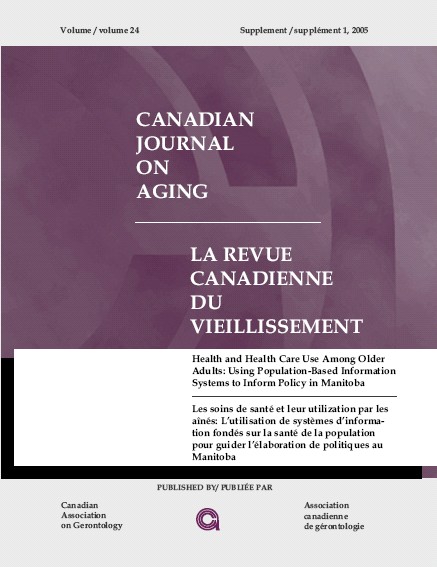
Volume 24, Supplement 1, 2005 (pdf)
Introduction
Verena H. Menec
Trends in the Health Status of Older Manitobans, 1985 to 1999
Verena H. Menec, Lisa Lix, and Leonard MacWilliam
Trends in the Utilization of Specific Health Care Services among Older Manitobans: 1985 to 2000
Marcia Finlayson, Lisa Lix, Gregory S. Finlayson, and Terry Fong
Use ofPhysician Services by Older Adults: 1991/1992 to 2000/2001
Diane E. Watson, Petra Heppner, Robert Reid, Bogdan Bogdanovic, and Noralou Roos
Growing Old Together: The Influence of Population and Workforce Aging on Supply and Use of Family Physicians
Diane E. Watson, Robert Reid, Noralou Roos, and Petra Heppner
Non-Clinical Factors Associated with Variation in Cataract Surgery Waiting Times in Manitoba
Carolyn De Coster
Patterns in Home Care Use in Manitoba
Lori Mitchell, Noralou P. Roos, and Evelyn Shapiro
Regional Variation in Home Care Use in Manitoba
Sandra Peterson, Evelyn Shapiro, and Noralou P. Roos
Pharmaceutical Use among Older Adults: Using Administrative Data to Examine Medication-Related Issues
Colleen Metge, Ruby Grymonpre, Matthew Dahl, and Marina Yogendran
Use of Acute Care Hospitals by Long-Stay Patients: Who, How Much, and Why?
Carolyn De Coster, Sharon Bruce, and Anita Kozyrskyj
Discharge Outcomes in Seniors Hospitalized for More than 30 Days
Anita Kozyrskyj, Charlyn Black, Dan Chateau, and Carmen Steinbach
Exploring Reasons for Bed Pressures in Winnipeg Acute Care Hospitals
Verena H. Menec, Sharon Bruce, and Leonard MacWilliam
Anticipating Change: How Many Acute Care Hospital Beds Will Manitoba Regions Need in 2020?
Gregory S. Finlayson, David Stewart, Robert B. Tate, Leonard MacWilliam,and Noralou Roos
A Methodology for Estimating Hospital Bed Need in Manitoba in 2020
Robert B. Tate, Leonard MacWilliam, and Gregory S. Finlayson
Data Quality in an Information-Rich Environment: Canada as an Example
Leslie L. Roos, Sumit Gupta, Ruth-Ann Soodeen, and Laurel Jebamani
Commentary
Betty Havens
Friday, February 10, 2006
BMJ - Case reports of suspected adverse drug reactions—systematic literature survey of follow-up
Yoon Kong Loke, Deirdre Price, Sheena Derry, and Jeffrey K Aronson
BMJ 2006 332: 335-339.
[Abstract] [Full Text] [PDF] [extra: References]
Qual Saf Health Care - Hearing the patient’s voice?
Factors affecting the use of patient survey data in quality improvement
E Davies and P D Cleary
Qual Saf Health Care 2005; 14: 428-432.
[Abstract] [Full text] [PDF]
Thursday, February 09, 2006
CIHI - The Health Indicators Project: The Next 5 Years.
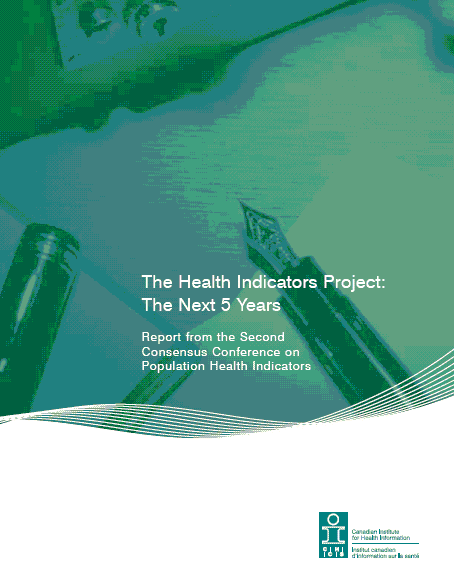 Report from the Second Consensus Conference on Population Health Indicators
The second Consensus Conference on Population Health Indicators was convened in order to achieve agreement on the measures used by the Canadian Institute for Health Information (CIHI) and Statistics Canada reflecting the health of Canadians, factors that affect our health and the performance of the health care system. This report summarizes the results of the conference, and includes a list of confirmed health indicators as well as directions for future development
http://secure.cihi.ca/cihiweb/dispPage.jsp?cw_page=GR_1326_E
CPSI - Canadian Root Cause Analysis Framework
 A tool for identifying and addressing the root causes of critical incidents in healthcare
The Canadian Root Cause Analysis Framework is designed as a quality improvement tool to help individuals and healthcare organizations determine all of the root causes/contributing factors that led to an event.
Authors: Canadian Patient Safety Institute (CPSI), Institute For Safe Medication Practices Canada and Saskatchewan Health
Root Cause Analysis Framework (PDF)
Tuesday, February 07, 2006
Monday, February 06, 2006
Friday, February 03, 2006
Med Decis Making - Valuation Structures of Health States Revealed with Singular ValueDecomposition
Paul F. M. Krabbe
Med Decis Making 2006;26 30-37
[Abstract] [PDF] [References]
Int J Med Inform - Health information systems
Failure, success and improvisation
R. Heeks
International Journal of Medical Informatics
Volume 75, Issue 2 , February 2006, Pages 125-137
Abstract Full Text + Links PDF (160 K)
Thursday, February 02, 2006
Med Care Res Rev - Quality improvement implementation and hospital performance on patient safety indicators
Weiner BJ, Alexander JA, Baker LC, Shortell SM, Becker M.
Med Care Res Rev. 2006;63:29-57.
[Abstract] [PDF] [References]
Jt Comm J Qual Patient Safety - How many hospital pharmacy medication dispensing errors go undetected?
Cina JL, Gandhi TK, Churchill W, et al.
Jt Comm J Qual Patient Safety. 2006;32:73-80.
Abstract
Wednesday, February 01, 2006
AHRQ - Closing the Quality Gap: Antibiotic Prescribing Behavior
 Unnecessary prescribing of antibiotics is a major problem in the US and worldwide, contributing to the problem of antimicrobial resistance (AMR). This review examines the effects of quality improvement strategies on reducing inappropriate prescribing of antibiotics, targeting both prescribing of antibiotics for non-bacterial illnesses ("the antibiotic treatment decision") and prescribing of broad-spectrum antibiotics when narrow-spectrum agents are indicated ("the antibiotic selection decision").
Closing the Quality Gap: A Critical Analysis of Quality Improvement Strategies: Volume 4—Antibiotic Prescribing BehaviorEvidence
Report (Publication No. 04(06)-0051-4)
(PDF file, 790 KB)
View or download Summary/Report
Tuesday, January 31, 2006
IOM - Valuing Health for Regulatory Cost-Effectiveness Analysis
This report from the Institute of Medicine (IOM) reviews and makes recommendations for using integrated measures of morbidity and mortality (such as quality-adjusted life years, or QALYs); reporting cost-effectiveness ratios; and data and research needs to improve regulatory cost-effectiveness analysis.
It also considers the ethical implications of using cost-effectiveness analysis, and integrated measures of health impact, in regulatory policy development.
www.iom.edu/CMS/3809/19739/32029.aspx
Monday, January 30, 2006
Int J Qual Health Care - Challenging the world: patient safety and health care-associated infection
Didier Pittet and Liam Donaldson
International Journal for Quality in Health Care 2006 18(1):4-8
[Abstract] [Full Text] [PDF]
editorial
A research agenda for patient safety
Thomas V. Perneger
Int J Qual Health Care 2006 18: 1-3
[Extract] [Full Text] [PDF]
Int J Qual Health Care - Use of risk-adjusted change in health status to assess the performance of integrated service networks in the Veterans Health
Selim AJ, Berlowitz D, Fincke G, Rogers W, Qian S, Lee A, Cong Z, Selim BJ, Ren XS, Rosen AK, Kazis LE.
International Journal for Quality in Health Care . 2006 Feb;18(1):43-50.
[Abstract] [Full Text] [PDF]
Friday, January 27, 2006
Thursday, January 26, 2006
IHI - Safety Climate Survey
Organizations working to develop or improve a culture of safety need a reliable measure to monitor the success of their initiatives.
The Institute for Healthcare Improvement (IHI) in collaboration with The Center of Excellence for Patient Safety Research & Practice at the University of Texas develop this survey tool to gain information about the perceptions of front-line clinical staff about safety in their clinical area.
Safety Climate Survey 2005 (IHI Tool)
Safety Climate Survey 2005 Benchmarking Data
Safety Climate Survey Calculation Spreadsheet 2005 (IHI Tool)
Wednesday, January 25, 2006
NPSA - Incident Decision Tree
The Incident Decision Tree is a key component of the National Patient Safety Agency’s (NPSA) drive to help the NHS move away from asking “Who was to blame?” to “Why did the individual act in this way?” when things go wrong.
The Incident Decision Tree has been created to help NHS managers and senior clinicians decide whether they need to suspend (exclude) staff involved in a serious patient safety incident and to identify appropriate management action.
The aim is to promote fair and consistent staff treatment within and between healthcare organisations.
The Incident Decision Tree complements the NPSA’s Root Cause Analysis toolkit and the two can be used in parallel.
Tuesday, January 24, 2006
Monday, January 23, 2006
JAMA - The 100 000 Lives Campaign
Setting a Goal and a Deadline for Improving Health Care Quality
Donald M. Berwick, MD, MPP, FRCP; David R. Calkins, MD, MPP; C. Joseph McCannon, BA; Andrew D. Hackbarth, BA
JAMA. 2006;295:324-327
PDF
Friday, January 20, 2006
Ann Fam Med - The break-even point
when medical advances are less important than improving the fidelity with which they are delivered
Woolf SH, Johnson RE.
Ann Fam Med. 2005 Nov-Dec;3(6):545-52
[Full Text] [PDF] [Supplemental data: Figure]
Thursday, January 19, 2006
AHRQ - The Hospital Built Environment
What Role Might Funders of Health Services Research Play?
AHRQ Publication No. 05-0106-EF, October 2005.
http://www.ahrq.gov/qual/hospbuilt/
A literature review and interviews with architects, designers, academics, and health care executives were conducted between February and May of 2005, in an attempt to determine if associations exist between hospital building design elements and patient and staff safety, health outcomes, and patient and staff satisfaction levels.
The findings were used to bring focus to the challenges of evidence-based hospital design and the roles that funders might play in the development and transfer of knowledge related to the constructed hospital environment.
pdf
Wednesday, January 18, 2006
Tuesday, January 17, 2006
BMJ - ABC of health informatics
Health and the future: promise or peril?
Jeremy C Wyatt and Frank Sullivane
BMJ, Dec 2005; 331: 1391 - 1393
Full text PDF
Communication and navigation around the healthcare system
Jeremy C Wyatt and Frank Sullivan
BMJ, Dec 2005; 331: 1325 - 1327
Full text PDF
Improving services with informatics tools
Frank Sullivan and Jeremy C Wyatt
BMJ, Nov 2005; 331: 1190 - 1192
Full text PDF
Keeping up: learning in the workplace
Jeremy C Wyatt and Frank Sullivan
BMJ, Nov 2005; 331: 1129 - 1132
Full text PDF
Referral or follow-up?
Frank Sullivan and Jeremy C Wyatt
BMJ, Nov 2005; 331: 1072 - 1074
Full text PDF
How computers help make efficient use of consultations
Frank Sullivan and Jeremy C Wyatt
BMJ, Oct 2005; 331: 1010 - 1012
Full text PDF
How informatics tools help deal with patients' problems
Frank Sullivan and Jeremy C Wyatt
BMJ, Oct 2005; 331: 955 - 957
Full text PDF
How computers can help to share understanding with patients
Frank Sullivan and Jeremy C Wyatt
BMJ, Oct 2005; 331: 892 - 894
Full text PDF
How decision support tools help define clinical problems
Frank Sullivan and Jeremy C Wyatt
BMJ, Oct 2005; 331: 831 - 833
Full text PDF
Why is this patient here today?
Frank Sullivan and Jeremy C Wyatt
BMJ, Sep 2005; 331: 678 - 680
Full text PDF
Is a consultation needed?
Frank Sullivan and Jeremy C Wyatt
BMJ, Sep 2005; 331: 625 - 627
Full text PDF
What is health information?
Jeremy C Wyatt and Frank Sullivan
BMJ, Sep 2005; 331: 566 - 568
Full text PDF
Monday, January 16, 2006
Health Affairs - U.S. Hospitals: Mission Vs. Market
 January/February 2006 - Volume 25, Number 1
The new issue of Health Affairs focuses entirely on hospitals, including studies on quality, reporting, pay-for-performance and other new technology.
Friday, January 13, 2006
AHRQ - 2005 Annual Patient Safety and HIT Conference Proceedings
 This document provides a synopsis of the major findings from the 2005 Patient Safety and Health IT Conference as well as lists of various tools and products developed.
For greater detail, including power point presentations and video recordings of select presentations go to: healthit.ahrq.gov/.../materials.html.
Download the conference proceedings (MS-Word, 536KB)
Thursday, January 12, 2006
AHRQ - A Toolkit for Redesign in Health Care
Agency for Healthcare Research and Quality
www.ahrq.gov/qual/toolkit/
This toolkit presents strategies for comprehensively redesigning and transforming processes of care in a hospital.
It includes a discussion of the forces that compel health care systems to embark on redesign or system transformation; a series of steps to be taken in planning for such as redesign or system transformation; and strategies for translating information gathered into proposed projects for implementation.
This toolkit was prepared for the Agency for Healthcare Research and Quality (AHRQ) by Denver Health, a partner in AHRQ's Integrated Delivery System Research Network.
Select for print version (PDF File, 350 KB).
Wednesday, January 11, 2006
AHRQ Releases 2005 National Healthcare Quality And Disparities Reports
Press Release, January 9, 2006.
Agency for Healthcare Research and Quality, Rockville, MD. http://www.ahrq.gov/news/press/pr2005/nhqrdrpr.htm
These reports, issued annually, measure quality and disparities in four key areas of health care in U.S.: effectiveness, patient safety, timeliness, and patient centeredness.
The 2005 National Healthcare Quality Report finds that overall quality of care for all Americans improved at a rate of 2.8 percent, the same increase shown in last year's report. However, the report notes there has been much more rapid improvement in some measures, especially where there have been focused efforts to improve care.
The 2005 National Healthcare Disparities Report finds that many of the largest disparities in measures of quality and access are observed for low-income people regardless of race or ethnicity, with some signs of improvement.
Tuesday, January 10, 2006
Monday, January 09, 2006
Am J Med Qual - Dual-system use
are there implications for risk adjustment and quality assessment?
Rosen AK, Gardner J, Montez M, Loveland S, Hendricks A.
Am J Med Qual. 2005 Jul-Aug;20(4):182-94
Pubmed
Friday, January 06, 2006
Health Serv Res - CAHPS Hospital Survey Special issue
This special issue of Health Services Research focuses on Consumer Assessment of Healthcare Providers and Systems (CAHPS) Hospital Survey
December 2005 - Vol. 40 Issue 6p2 Page 1973-2181
Measuring Hospital Care from the Patients' Perspective: An Overview of the CAHPS® Hospital Survey Development Process
Goldstein, Elizabeth; Farquhar, Marybeth; Crofton, Christine; Darby, Charles; Garfinkel, Steven
Review of the Literature on Survey Instruments Used to Collect Data on Hospital Patients' Perceptions of Care
Castle, Nicholas G.; Brown, Julie; Hepner, Kimberly A.; Hays, Ron D.
What Do Consumers Want to Know about the Quality of Care in Hospitals?
Sofaer, Shoshanna; Crofton, Christine; Goldstein, Elizabeth; Hoy, Elizabeth; Crabb, Jenny
Role of Cognitive Testing in the Development of the CAHPS® Hospital Survey
Levine, Roger E.; Fowler, Floyd J.; Brown, Julie A.
Methods Used to Streamline the CAHPS® Hospital Survey
Keller, San; O'Malley, A. James; Hays, Ron D.; Matthew, Rebecca A.; Zaslavsky, Alan M.; Hepner, Kimberly A.; Cleary, Paul D.
Exploratory Factor Analyses of the CAHPS® Hospital Pilot Survey Responses across and within Medical, Surgical, and Obstetric Services
O'Malley, A. James; Zaslavsky, Alan M.; Hays, Ron D.; Hepner, Kimberly A.; Keller, San; Cleary, Paul D.
Patterns of Unit and Item Nonresponse in the CAHPS® Hospital Survey
Elliott, Marc N.; Edwards, Carol; Angeles, January; Hambarsoomians, Katrin; Hays, Ron D.
Equivalence of Mail and Telephone Responses to the CAHPS® Hospital Survey
Vries, Han; Elliott, Marc N.; Hepner, Kimberly A.; Keller, San D.; Hays, Ron D.
Assessment of the Equivalence of the Spanish and English Versions of the CAHPS® Hospital Survey on the Quality of Inpatient Care
Hurtado, Margarita P.; Angeles, January; Blahut, Steven A.; Hays, Ron D.
Case-Mix Adjustment of the CAHPS® Hospital Survey
O'Malley, A. James; Zaslavsky, Alan M.; Elliott, Marc N.; Zaborski, Lawrence; Cleary, Paul D.
Thursday, January 05, 2006
Am J Nurs - State of the Science on Safe Medication Administration
March 2005, Volume 105, Issue 3 supplement
Making Medication Administration Safe: Report challenges nurses to lead the way
Kathleen G. Burke, Diana J. Mason
Discussion & Recommendations: Safe Medication Administration: An invitational symposium recommends ways of addressing obstacles
Errors from the Consumer’s Perspective: Tragedy motivated one woman to take action
Ilene Corina
Executive Summary: The State of the Science on Safe Medication Administration symposium
Kathleen G. Burke
How We Think About Medication Errors: A model and a charge for nurses
Victoria L. Rich
Medication Errors: Why they happen, and how they can be prevented
Ronda G. Hughes, Eduardo Ortiz
Medication Reconciliation: Transfer of medication information across settings—keeping it free from error
Jane H. Barnsteiner
Technology and Safe Medication Administration
Mark Crawford, Janet Mullan, et al.
Toward Safer IV Medication Administration: The narrow safety margins of many IV medications make this route particularly dangerous
Patrice K. Nicholas, Christine R. Agius
Wednesday, January 04, 2006
J Clin Epidemiol - An Analysis of Administrative Data...
An Analysis of Administrative Data Found that Proximate Clinical Event Ratios Provided a Systematic Approach to Identifying Possible Iatrogenic Risk Factors or Complications.
Journal of Clinical Epidemiology 58:2005, 162-170.
W. Baine, S. KazakovaPubmed
Qual Saf Health Care - Supplements on Safety
Organisations and safety in healthcare
Quality and Safety in Health Care 2004 Dec; 13 (Suppl 2) : 1-56.
Patient safety methodology
Quality and Safety in Health Care 2003 Dec; 12 (Suppl 2) : 1-72.
Tuesday, January 03, 2006
Health Serv Res - Measurement special issue
This special issue of Health Services Research focuses on measurement issues in health services research and on the potential contributions of measurement toward quality improvement efforts.
October 2005 - Vol. 40 Issue 5p2 Page 1571-1711
Health Services Research: Critical Measurement Issues
Shirley Meehan, PhD, MBA
Measurement in Veterans Affairs Health Services Research: Veterans as a Special Population
Robert O. Morgan, PhD et al.
Validity of Measures Is No Simple Matter
Lee Sechrest, PhD
Integrating Validity Theory with Use of Measurement Instruments in Clinical Settings
P. Adam Kelly, PhD, MBA et al.
Measuring Diagnoses: ICD Code Accuracy
Kimberly J. O'Malley, PhD et al.
Measurement Issues in Health Disparities Research
Mildred Ramirez, PhD et al.
Conceptualizing and Categorizing Race and Ethnicity in Health Services Research
Marvella E. Ford, PhD et al.
Proxies and Other External Raters: Methodological Considerations
A. Lynn Snow, PhD et al.
Dynamic Assessment of Health Outcomes: Time to Let the CAT Out of the Bag?
Karon F. Cook, PhD et al.
Monday, January 02, 2006
AHRQ - Medical Teamwork and Patient Safety
The Evidence-based Relation
This paper present evidence to support the relation between team training and patient safety. It extends earlier work by Pizzi and colleagues who argue that Crew Resource Management (CRM) training has a great deal of potential as a safe patient practice.
Training medical professionals to operate as a well-coordinated team should enhance patient safety and lead to a reduction in medical errors.
http://www.ahrq.gov/qual/medteam/
PDF File
Friday, December 30, 2005
Thursday, December 29, 2005
AHRQ - Chronic Condition Indicator
The Chronic Condition Indicator is one in a family of databases and software tools developed as part of the Healthcare Cost and Utilization Project (HCUP), it provides an easy way for users to categorize ICD-9-CM diagnosis codes as either "chronic" or "not chronic."
The Chronic Condition Indicator is created to facilitate health services research on diagnoses using administrative data. This classification system allows researchers to readily determine if a diagnosis is a chronic condition. In addition, the tool groups all diagnoses into body systems so that users can create indicators listing which specific body systems are affected by a chronic condition.
Chronic Condition Indicator
Wednesday, December 28, 2005
Am J Med Qual - Relationship between performance measurement and accreditation
implications for quality of care and patient safety
Miller MR, Pronovost P, Donithan M, Zeger S, Zhan C, Morlock L, Meyer GS Am J Med Qual. 2005 Sep-Oct;20(5):239-52.
[Abstract] [PDF] [References]
Am J Med Qual -Training Health Care Professionals for Patient Safety
American Journal of Medical Quality 2005 20: 277-279.
Carolyn M. Clancy
[PDF] [References]
Tuesday, December 27, 2005
Ann Intern Med - Hospital at Home
Feasibility and Outcomes of a Program To Provide Hospital-Level Care at Home for Acutely Ill Older Patients
Bruce Leff, Lynda Burton, Scott L. Mader, Bruce Naughton, Jeffrey Burl, Sharon K. Inouye, William B. Greenough, III, Susan Guido, Christopher Langston, Kevin D. Frick, Donald Steinwachs, and John R. Burton
Ann Intern Med. 2005 Dec 6;143(11):798-808
Abstract Full Text PDF
Editorial
Hospital at Home: The Evidence Is Not Compelling
Sasha Shepperd
Ann Intern Med. 2005 Dec 6;143(11):840-1
Full Text PDF
Monday, December 26, 2005
NASHP - Maximizing the Use of State Adverse Event Data to Improve Patient Safety
 During the nearly six years since the Institute of Medicine released its first report on medical errors, there has been growing recognition of the size and scope of the problem.
Many US states have responded by creating or improving reporting systems for collecting hospital-based adverse events. As of September 2005, twenty-four states had passed legislation or regulation related to hospital reporting of adverse events.
In May 2005, National Academy for State Health Policy (NASHP) convened a meeting of data collectors, analysts, and users to identify mechanisms to improve reporting, tools used for event report analysis and dissemination, and opportunities for improvement.
This report reviews key findings from the meeting to assist states in improving their reporting systems and to encourage providers to improve the quality of the required reports so that data are credible and useful in shaping patient safety improvement interventions.
Full text
Friday, December 23, 2005
saferhealthcare - Out of the Shadows
Raising the Profile of healthcare associated infections (HCAI)
saferhealthcare.org.uk - 14 December 2005
Brian Duerden
Read
Int J Qual Health Care - Economic modeling of methods to stimulate quality improvement
Karen Eggleston
Int J Qual Health Care 2005 17: 521-531
[Abstract] [Full Text] [PDF]
Thursday, December 22, 2005
Qual Saf Health Care - Narrative methods in quality improvement research
T Greenhalgh, J Russell and D Swinglehurst
Qual Saf Health Care 2005; 14: 443-449
[Abstract] [Full text] [PDF]
Int J Qual Health Care - Policymaker use of quality of care information
Jacqueline J. Fickel and Carol R. Thrush
Int J Qual Health Care 2005 17: 497-504
[Abstract] [Full Text] [PDF]
Wednesday, December 21, 2005
Pediatrics - Unexpected increased mortality after implementation of a commercially sold computerized physician order entry system
Han YY, Carcillo JA, Venkataraman ST, et al.
Pediatrics. 2005;116:1506-1512.
Pubmed
Int J Qual Health Care - A performance assessment framework for hospitals
the WHO regional office for Europe PATH project
J. Veillard, F. Champagne, N. Klazinga, V. Kazandjian, O. A. Arah, and A.-L. Guisset
Int J Qual Health Care 2005 17: 487-496
[Abstract] [Full Text] [PDF]
Tuesday, December 20, 2005
BMJ - Scottish health service is ordered to release data on surgeons’ performance
Bryan Christie
BMJ 2005;331:1424
[Extract] [Abridged PDF] [Full text]
Anesthesiology - Validity of unplanned admission to an intensive care unit as a measure of patient safety in surgical patients
Haller G, Myles PS, Wolfe R, Weeks AM, Stoelwinder J, McNeil J.
Anesthesiology. 2005;103:1121-1129.
PubMed
Monday, December 19, 2005
Qual Saf Health Care - Control, compare and communicate
designing control charts to summarise efficiently data from multiple quality indicators
B Guthrie, T Love, T Fahey, A Morris, and F Sullivan
Qual Saf Health Care 2005; 14: 450-454
[Abstract] [Full text] [Web-only figures] [PDF]
Int J Qual Health Care - Patient perspectives of patient–provider communication after adverse events
Christine W. Duclos, Mary Eichler, Leslie Taylor, Javan Quintela, Deborah S. Main, Wilson Pace, and Elizabeth W. Staton
Int J Qual Health Care 2005 17: 479-486
[Abstract] [Full Text] [PDF]
Friday, December 16, 2005
Health Affairs - Blind faith and choice
Edwards RT
Health Affairs, Vol 24, Issue 6, 1624-1628
full text
J Gen Intern Med - What can hospitalized patients tell us about adverse events?
Learning from patient-reported incidents.
Weingart SN, Pagovich O, Sands DZ, et al.
J Gen Intern Med 2005 Sep; 20(9):830-836.
Pubmed
Thursday, December 15, 2005
ACSQ - Australian Council for Safety and Quality in Health Care Annual Report 2005

This sixth report is the last formal report to Health Ministers as the Australian Council for Safety and Quality in Health Care’s (Council) agreed extended term will finish in June 2006. It is set against a background of the Ministerial Review of future governance arrangements for safety and quality in health care.
This report builds on all five previous reports to Australian Health Ministers, provides a summary of achievements since Council’s inception in 2000 and identifies the foundation for future directions in safety and quality in Australia that has been built with the active support of many stakeholders.
final report
Australian Health Ministers Agree on New Safety and Quality Measures
Ministers agreed that the Australian Council for Safety and Quality in Health Care, which was established in January 2000, will be succeeded by a national body called the Australian Commission on Safety and Quality in Health Care which will report to Health Ministers and be closely linked to health departments and other government and non-government health bodies.
Ministers agreed with the Review finding (see previous news) that it was crucial that the state of safety and quality in the Australian health care system be regularly measured and reported publicly, and a new Australian Commission on Safety and Quality in Health Care would be charged with publishing a national report every two years.
read more
Wednesday, December 14, 2005
JAMA - The Long Road to Patient Safety
A Status Report on Patient Safety Systems
Daniel R. Longo; John E. Hewett; Bin Ge; Shari Schubert
JAMA. 2005;294:2858-2865.
ABSTRACT FULL TEXT PDF
Editorial
Creating a Safer Health Care System: Finding the Constraint
Stephen G. Pauker; Ellen M. Zane; Deeb N. Salem
JAMA. 2005;294:2906-2908.
EXTRACT FULL TEXT PDF
Tuesday, December 13, 2005
IOM - Performance Measurement: Accelerating Improvement
 This is the first report in the Institute of Medicine (IOM) Pathways to Quality Health Care series, each report will be focused on a specific policy approach to improving the quality of health care.
This report focuses on the selection of measures to support the quality improvement efforts of a diverse set of stakeholders, and on the creation of a common infrastructure for guiding and managing aconsistent set of such measures nationally and regionally.
www.iom.edu/report.asp?id=31310
Monday, December 12, 2005
WHO - Draft Guidelines for Adverse Event Reporting and Learning Systems
 World Health Organisation - World Alliance for Patient Safety is launching the new Draft Guidelines for Adverse Event Reporting and Learning Systems. The guidelines are being made available worldwide to facilitate the development of new and improved reporting systems for patient safety .
The primary importance of reporting systems is to learn from experience and mistakes, and to use these results as a basis for implementing preventive action in the future. The Alliance efforts in this area facilitate the compilation and interpretation of international data on adverse events for early detection of potential problems and sharing of results to ensure that solutions are developed.
The draft guidelines aim to support countries to select, adapt or modify the recommendations to improve their reporting. The guidelines will undergo modification over time as experiences accumulate.
More information [pdf 1.20Mb]
Friday, December 09, 2005
Department of Health - Surveillance of surgical site infection in orthopaedic surgery
 Surveillance of surgical site infection following orthopaedic surgery has been included in the mandatory healthcare-associated infection surveillance system in England since April 2004.
The surveillance is managed by the Health Protection Agency on behalf of the Department of Health. Data is collected as part of the Surgical Site Infection Surveillance Service (SSISS), which has supported voluntary surveillance in several categories of surgical procedure since 1997.
Surgical Site Infection Surveillance Service (SSISS) has recently published the first annual report:
Mandatory surveillance of surgical site infection in orthopaedic surgery, report of data collected between April 2004 and March 2005
Thursday, December 08, 2005
JAMA - Clinical Decision Support and Appropriateness of Antimicrobial Prescribing
A Randomized Trial
Matthew H. Samore, Kim Bateman, Stephen C. Alder, Elizabeth Hannah, Sharon Donnelly, Gregory J. Stoddard, Bassam Haddadin, Michael A. Rubin, Jacquelyn Williamson, Barry Stults, Randall Rupper, and Kurt Stevenson
JAMA. 2005;294:2305-2314.
ABSTRACT FULL TEXT
-----------------------------------------------------
The Institute of Healthcare Improvement has partnered with JAMA, with the help of The Robert Wood Johnson Foundation, to facilitate the transition of science into practice through the series “Author in the Room."
In this series, the author of a study published in JAMA with the potential to change clinical practice will talk with clinicians during a conference call, facilitated by clinical experts in implementing changes in practice.
Read the editorial (DeAngelis, C., MD, MPH, Berwick, D., MP, MPP. JAMA. 2005;293:1004.)
Wednesday, December 21, 2005 Author in the Room teleconference deal with Matthew H. Samore, MD, author of "Clinical Decision Support and Appropriateness of Antimicrobial Prescribing."
Author in the RoomSM
Wednesday, December 07, 2005
NQF - Voluntary Consensus Standards for Diabetes Quality Improvement
The National Quality Forum (NQF) has announced the endorsement of 29 national voluntary consensus standards for diabetes care for internal quality improvement (QI) and community-level monitoring.
The purpose of these NQF-endorsed™ measures is to improve the care of adults who have diabetes mellitus. The standards are derived from a larger set of measures advocated by the National Diabetes Quality Improvement Alliance or measures developed by the Agency for Healthcare Research and Quality.
www.qualityforum.org....pdf
Tuesday, December 06, 2005
Medical Care - How Robust Are Hospital Ranks Based on Composite Performance Measures?
Rowena Jacobs, Maria Goddard, Peter C. Smith
Medical Care. 43(12):1177-1184
Abstract HTML PDF (343 K)
AHRQ - QI Workgroup on Composite Measures
Call for Nominations
The Agency for Healthcare Research and Quality (AHRQ) is seeking nominations for members of the AHRQ Quality Indicators Workgroup on Composite Measures for the Prevention Quality Indicators (PQIs).
The AHRQ QI Workgroup is being formed as part of a structured approach for developing composite measures at the national and state level.
The Workgroups will evaluate appropriate technical and feasible methodological approaches currently available.
Their role will be to discuss and suggest strategies as to what composite measure methodology would best fit the AHRQ QI user needs.
news
Monday, December 05, 2005
WHO/Europe – Do current discharge arrangements from inpatient hospital care
for the elderly reduce readmission rates, the length of inpatient stay or mortality, or improve health status? For many older people, admission to an acute hospital is associated with a decline in physical functioning, which is not always recovered at the time of discharge, or even soon.
Iatrogenic deterioration is not uncommon and, with extended stays, both informal and formal patterns of support at home may be disrupted and make a return to independent living extremely difficult.
Thus, hospital discharge arrangements are a key issue in ensuring the safe and effective transfer of older people between inpatient hospital care, and community-based home care.
A Health Evidence Network (HEN) evidence report shows that it is possible to reduce the rate of hospital readmission of elderly people.
Report
Friday, December 02, 2005
PBGH - Reports on Physician Performance Measurement and Incentives
 The Pacific Business Group on Health (PBGH), a business coalition of 50 purchasers, recently released two reports:
" Using Administrative Data to Assess Physician Quality and Efficiency " outlines quality measures that address structure, process, and outcome metrics currently in use. Commercially available cost efficiency software measures relative use of resources after defining episodes of care, considering attribution, and adjusting for risk. The report describes an array of national initiatives engaged in the development, endorsement, or deployment of standardized measurement.
"Aligning Physician Incentives" documents agreement by a diverse group of stakeholders to endorse performance-based payment of physicians.
Thursday, December 01, 2005
BMJ - Why doctors' outcomes should be published in the press
Ben Bridgewater
BMJ 2005;331:1210
[Extract] [Full text]
see also:
Dying to Know: Public Release of Information About Quality of Health Care
Martin N. Marshall, Paul G. Shekelle, Robert H. Brook, Sheila Leatherman
2000 - The Nuffield Trust – RAND Health
www.rand.org/publications/MR/MR1255/
Wednesday, November 30, 2005
Milbank Quarterly - Improving the Quality of Long-Term Care with Better Information
Vincent Mor
Milbank Quarterly September 2005 83 (3): 333–64
click here for full text
Tuesday, November 29, 2005
WHO/Europe – What are the advantages and limitations of different quality and safety tools for health care?

The term "quality tools" is used in many different ways to refer to a method used by an individual, a team, an organization or a health system. It is most often used in a narrow sense in American texts to refer to a set of simple "continuous quality improvement" methods (CQI tools).
More broadly, it includes many other safety and quality methods, frameworks, programmes or systems. Some are diagnostic methods to help decision-making, some are for intervention and change only, and some include both methods for diagnosis and intervention.
What are the advantages and limitations of different quality and safety tools for health care?
A Health Evidence Network (HEN) analysis of the effectiveness of different tools for improving quality of care in hospitals and communities.
Report
Monday, November 28, 2005
CMS - National Implementation of Hospital Consumer Assessment of Health Providers and Systems (HCAHPS)
The Centers for Medicare & Medicaid Services (CMS) recently released the final Hospital CAHPS (HCAHPS) survey instrument.
The intent of the HCAHPS initiative is to provide a standardized survey instrument and data collection methodology for measuring patients’ perspectives on hospital care.
HCAHPS can be viewed as a core set of questions that can be
combined with a broader, customized set of hospital-specific items.
Once HCAHPS is fully implemented its results will be publicly reported on the Hospital Compare website
- CMS10102-SS.pdf 332KB Supporting Statement and Instrument_Survey
- CMS10102-Response.pdf 283 KB Response to Comments Dated 10-27-05
- CMS10102-Instructions.pdf 23 KB Instructions for Completing the 83-I
- CMS – HCAHPS
- AHRQ - Fact Sheet HCAHPS®
Friday, November 25, 2005
The Sorry Works! Coalition
The Sorry Works! Coalition is a new, nationwide organization of doctors, lawyers, insurers, and patient advocates dedicated to promoting full-disclosure and apologies for medical errors as a “middle ground solution” to the medical liability crisis.
The coalition advocates that after every bad outcome or adverse event hospitals and doctors perform root cause analyses to determine if the standard of care was met.
If a root cause analysis showed that the standard of care was not met (i.e, a medical error, negligence), the hospital staff and doctors apologize to the patient/family, provide an explanation of what happened and how the hospital will fix the procedures so the error is not repeated, and make a fair offer of upfront compensation. The hospital attorney and plaintiffs’ attorney will usually negotiate the compensation and the case will be closed in a short period of time.
If, however, the standard of care was met (no errors), the hospital still meets with the patient/family and their attorney(s) and explains what happened, provides medical charts, and answers all questions. Hospitals and doctors show compassion, prove their innocence, and avoid any appearance of a cover up.
www.sorryworks.net
Thursday, November 24, 2005
IOM - Improving the Quality of Health Care for Mental and Substance-Use Conditions
Quality Chasm Series This new report Institute of Medicine (IOM)examines the difference between overall health care and health care for mental and substance-use conditions and finds that the framework set forth in the 2001 report, Crossing the Quality Chasm, can be applied to health care for mental and substance-use conditions.
The report then describes a multifaceted and comprehensive strategy to do so.
www.iom.edu/report.asp?id=30836
Wednesday, November 23, 2005
The AMA - "Making Strides in Safety"
www.ama-assn.org/ama/pub/category/15010.html
The AMA is working as a strategic partner with the Institute for Healthcare Improvement (IHI) in the 100,000 Lives Campaign, which aims to educate physicians on ways to enhance patient safety in the hospital setting.
Hospitals can implement any or all of the programs, including:
- Deployment of "Rapid Response Teams"
- Assurance of optimal care for patients with acute myocardial infarction
- Prevention of ventilator-associated pneumonia
- Prevention of surgical-site infections
- Prevention of adverse drug events
- Prevention of central line infections
Download a participation toolkit (PDF, 310KB), which provides step-by-step instructions on how to get started or an implementation toolkit (PDF, 372KB), which assists involvement in the campaign.
Tuesday, November 22, 2005
CMS - Requires Hospitals to submit data on Implantable Cardioverter Defibrillator (ICD)
ICD Registry™
In accordance with the ICD National Coverage Determination (NCD), hospitals must submit data on all ICD implantations that were performed for primary prevention and occurred on or after January 2005.
Medicare intends to purchase the minimum data necessary to ensure that the appropriate beneficiaries are receiving ICDs as required by the NCD.
In addition, CMS plans to use data from the American College of Cardiology National Cardiovascular Data Registry (ACC-NCDR®) ICD Registry™ in order to equip the public with the ability to compare quality metrics for facilities that implant ICDs for the primary prevention of sudden cardiac death.
CMS also hopes to answer several key questions about ICD implantation, including: whether complications vary by device manufacturer or device type; whether patient outcomes (i.e., morbidity and mortality) differ among patients based on clinical characteristics, device characteristics, the facility and/or physician who implants the device, etc.
As it becomes available, this aggregate information will be posted to the CMS Coverage web site at www.cms.hhs.gov/coverage.
Monday, November 21, 2005
Health Affairs - Rethinking Health Reform
November/December 2005 - Volume 24, Number 6
- The Struggle That Never Ends: Reforming U.S. Health Care - John K. Iglehart
- Health Care Reform: Why? What? When? - Victor R. Fuchs and Ezekiel J. Emanuel
- Whence And Whither Health Insurance? A Revisionist History - Donald W. Moran
- The Political Divide In Health Care: A Liberal Perspective -Thomas Bodenheimer
- The Rise In Health Care Spending And What To Do About It - Kenneth E. Thorpe
- Making Markets Work: Five Steps To A Better Health Care System - John F. Cogan, R. Glenn Hubbard, and Daniel P. Kessler
- Federalism And Health Policy - Richard P. Nathan
- Health Insurance In Mexico: Achieving Universal Coverage Through Structural Reform - Felicia Marie Knaul and Julio Frenk
- Managed Consumerism In Health Care - James C. Robinson
- Reviving Managed Care With Health Savings Accounts - Mark A. Hall and Clark C. Havighurst
- Coordinated Agency Versus Autonomous Consumers In Health Services Markets - Bryan E. Dowd
- Competition In Health Care: Its Evolution Over The Past Decade - Paul B. Ginsburg
- Competition And New Technology - Mark V. Pauly
- Which Way For Competition? None Of The Above - Robert A. Berenson
- The Delivery System Matters - Francis J. Crosson
- Why Employers Need To Rethink How They Buy Health Care - Robert S. Galvin and Suzanne Delbanco
- Consumer-Driven Health Care: Just A Tweak Or A Revolution? - Greg Scandlen
- The 100,000 Lives Campaign: Crystallizing Standards Of Care For Hospitals - Alice G. Gosfield and James L. Reinertsen
- Reporting Clinical Trial Results To Inform Providers, Payers, And Consumers - Rodney A. Hayward, David M. Kent, Sandeep Vijan, and Timothy P. Hofer
Friday, November 18, 2005
AHRQ - National Resource Center Health IT Teleconference Series
Making Health IT Work
Three state-of-the art teleconferences sponsored by the Agency for Healthcare Research and Quality's (AHRQ) National Resource Center for Health Information Technology will walk through the steps of three challenging enterprises: external collaboration, EHR readiness assessment, and health IT implementation.
- Community-Based Health IT Initiatives: How Do You Make Them Work?
- Are You Ready for EHRs? How to Make that Assessment
- Getting Started with Health IT Implementation
event registration website
Thursday, November 17, 2005
AMA - Opposes Physician Voluntary Reporting Program
The American Medical Association (AMA) is urging the Centers for Medicare and Medicaid Services (CMS) not to implement the Physician Voluntary Reporting Program (PVRP) that would measure quality of care from physician offices starting in January 2006.
In a letter to CMS the AMA said:
AMA letter
Wednesday, November 16, 2005
CMS/Premier - Hospital Quality Incentive Demonstration (HQID)

Data from the first year
“Pay-for-performance” can increase clinical quality and save lives, according to the first year of official data from a national project involving more than 260 hospitals. The Centers for Medicare and Medicaid Services (CMS) will pay $8.85 million in incentives to the top-performing hospitals in the project, which is managed by Premier Inc.
Data from the first year of CMS/Premier Hospital Quality Incentive Demonstration (HQID), validated by CMS and reported publicly, demonstrate a significant improvement in the quality of care across five clinical focus areas as measured by 33 nationally standardized and widely accepted quality indicators.
Year 1 Results release
CMS/Premier Hospital Quality Incentive Demonstration
Tuesday, November 15, 2005
CMS - Physician Voluntary Reporting Program

As part of its overall quality improvement efforts, CMS is launching the Physician Voluntary Reporting Program (PVRP).
This new program builds on Medicare’s comprehensive efforts to substantially improve the health and function of beneficiaries by preventing chronic disease complications, avoiding preventable hospitalizations, and improving the quality of care delivered. Under the voluntary reporting program, physicians will be asked to help capture data about the quality of care provided to Medicare beneficiaries.
Voluntary reporting of quality data through the PVRP will begin in January 2006.
The PVRP will begin with 36 evidence-based quality performance measures (these clinically valid measures have been part of the guidelines endorsed by physicians and the medical specialty societies and are the result of extensive input and feedback from physicians and other quality care experts).
Additional quality measures are under development now and could be phased-in for reporting later in 2006.
- Overview
- PVRP Background and General Instructions
- G-Code Specifications and Instruction for Clinical Measures
- Medlearn Matters article
- Change Request
Monday, November 14, 2005
AHRQ - CERTs Annual Report: Year 5
 The Centers for Education & Research on Therapeutics (CERTs) program was created to investigate and research specific areas of therapeutics, and to use this knowledge to educate consumers, health care providers, and policymakers about the risks and benefits of such therapies.
The CERTs were established in 1999 by the Agency for Healthcare Research and Quality (AHRQ) in consultation with the U.S. Food and Drug Administration (FDA).
The CERTs consist of a network of research centers, a coordinating center, a steering committee, and numerous partnerships with public and private organizations dedicated to improving the quality and safety of therapeutics.
This report highlights a number of CERTs research and educational projects completed in the past year. It also includes some of the projects currently in progress and in the planning stages.
CERTs Annual Report: Year 5 (PDF File, 3.8 MB)
Overview: Fact Sheet
Friday, November 11, 2005
IOM - 35th Annual Meeting to Focus on Pharmaceuticals
 As part of its 35th annual meeting, the Institute of Medicine host an all-day public symposium, "Pharmaceuticals in the 21st Century"
Agenda and Slide Presentations
A specific presentation pointed to Drug Safety:
Improving Drug Safety: A Systems Approach
Brian L. Strom, M.D., M.P.H., Professor and Chair, Department of Biostatistics and Epidemiology and Director, Center for Clinical Epidemiology and Biostatistics, University of Pennsylvania School of Medicine
View Slides
Thursday, November 10, 2005
AHRQ - launched its first audio newscast

This audio podcast features current news and information from the U.S. Agency for Healthcare Research and Quality (AHRQ) Features include:
- A look at this week's AHRQ’s News & Numbers.
- AHRQ’s patient safety research found that physician groups are slow to adopt electronic health records.
- "Learning from Errors" segment reports on two studies, one examining the impact of nurse fatigue and the other on ICU patients.
- AHRQ releases a New Publication to help consumers understand and get quality health care called the: Guide to Health Care Quality: How to know it when you see it.
- Finally, a look at the first podcast produced by the U.S. Department of Health and Human Services.
Wednesday, November 09, 2005
Medical Care - Effects of New Zealand's Health Reengineering on Nursing and Patient Outcomes
Medical Care. 43(11):1140-1146, November 2005.
McCloskey, Barbara A. ; Diers, Donna K.
Abstract
HTML
PDF (361 K)
Tuesday, November 08, 2005
AHRQ - Health Information Technology, Quality of Care, and Evidence-based Medicine
An Interlinked Triad
Remarks by Carolyn Clancy, M.D., Director of the Agency for Healthcare Research and Quality
Annual Symposium, American Medical Informatics Association
Washington, D.C., October 25, 2005
Introduction
Momentum for Health IT
The Coming Revolution
Quality and Health IT
Effective Health Care
What's Next
Monday, November 07, 2005
Medical Care - Comorbidity
Comorbidity Indices to Predict Mortality From Medicare Data: Results From the National Registry of Atrial Fibrillation.
Yan Yan, Elena Birman-Deych, Martha J. Radford, David S. Nilasena, Brian F. Gage.
Medical Care. 43(11):1073-1077, November 2005
Abstract
HTML
PDF (194 K)
Coding Algorithms for Defining Comorbidities in ICD-9-CM and ICD-10 Administrative Data.
Hude Quan; Vijaya Sundararajan; Patricia Halfon; Andrew Fong; Bernard Burnand; Jean-Christophe Luthi; L Duncan Saunders; Cynthia A. Beck; Thomas E. Feasby; William A. Ghali.
Abstract
HTML
PDF (351 K)
Friday, November 04, 2005
CMWF - Taking the Pulse of Health Care Systems
Experiences of Patients with Health Problems in Six Countries
Cathy Schoen, Robin Osborn, Phuong Trang Huynh, Michelle Doty, Kinga Zapert, Jordon Peugh, Karen Davis
Health Affairs Web Exclusive, November 3, 2005, W5-509–W5-525
A new Commonwealth Fund international survey report on health care access, safety, and care coordination in Australia, Canada, Germany, New Zealand, the U.K., and the U.S.
The survey found no one nation best or worst overall on the measures studied. But the U.S. stood out for high error rates, inefficient care coordination, and high out-of-pocket costs that serve as barriers to access.
- More than one of four patients in each country (28% to 32%) said risks were not completely explained during their hospital stay.
- In all countries, sizable majorities of patients said physicians had not always reviewed all their medications during the past year, and one-third or more reported infrequent reviews.
- Across countries, one-sixth to one-fourth of patients said physicians only sometimes, rarely, or never make goals of care and treatment clear or give them clear instructions.
- Relative to the U.S. and Canada, the four countries reporting comparatively rapid access to physicians— Australia, Germany, New Zealand, and the U.K.—also had significantly lower rates of emergency room use.
Chartpack pdf[download] ppt [download]
Topline Results [download]
In the Literature [download]
Commonwealth Fund publication details
Press release
Thursday, November 03, 2005
Kaiser Family Foundation - Conversations on Health
 Hosted by former ABC News Correspondent and current Kaiser Family Foundation Vice President and Senior Advisor for Communications Jackie Judd, Kaiser Conversations on Health is a series of live interviews with leading newsmakers discussing major health issues.
- October 20, 2005 -- Aetna CEO Dr. John W. "Jack" Rowe
- June 14, 2005 -- NIH Director Dr. Elias A. Zerhouni
- April 14, 2005 -- Virginia Governor Mark Warner
- March 24, 2005 -- Former Health and Human Services (HHS) Secretary Tommy Thompson
- September 29, 2004 -- Centers for Medicare & Medicaid Services (CMS) Administrator Mark McClellan
- March 3, 2004 -- AARP CEO Bill Novelli
- December 3, 2003 -- Irish rock star Bono, founder of the debt, AIDS and trade advocacy group DATA
Wednesday, November 02, 2005
Qual Saf Health Care - Effectiveness of routine reporting
to identify minor and serious adverse outcomes in surgical patients
P J Marang-van de Mheen, N van Hanegem, and J Kievit
Qual Saf Health Care 2005; 14: 378-382.
[Abstract] [Full text] [PDF]
Qual Saf Health Care - Measuring patient safety climate
a review of surveys
J B Colla, A C Bracken, L M Kinney, and W B Weeks
Qual Saf Health Care 2005; 14: 364-366.
[Abstract] [Full text] [PDF]
Tuesday, November 01, 2005
J Clin Epidemiol - A review of uses of health care utilization databases for epidemiologic research on therapeutics
Schneeweiss S, Avorn J.
J Clin Epidemiol. 2005 Apr;58(4):323-37
Pubmed
Subscribe to:
Posts (Atom)

 Posts
Posts